
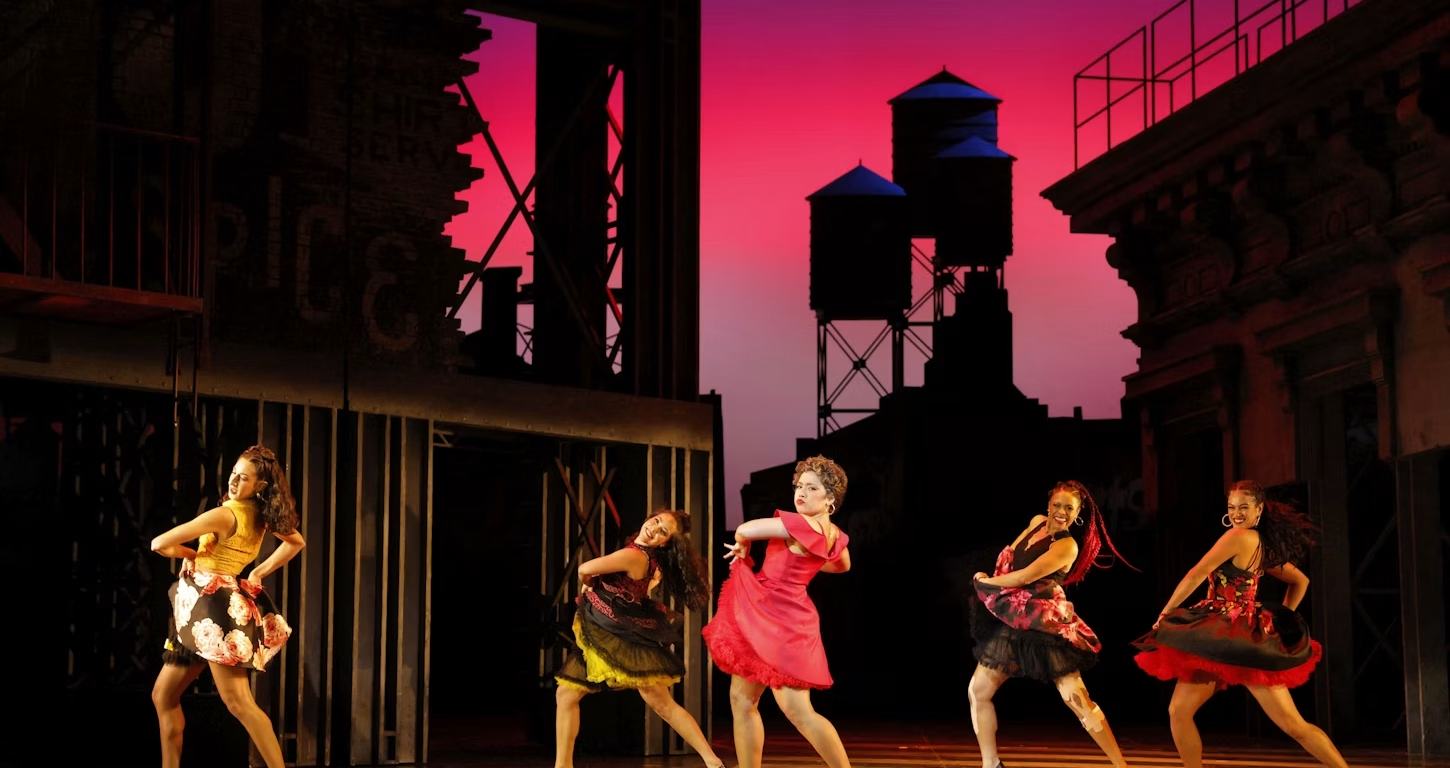
For as long as I can remember, I have loved the classic 1961 West Side Story film. But after watching the opening night of the staged musical at the LA Opera, I have come to the realization after all these years that while still delightful, this musical is a severely outdated product of its time and may need to dance off into the sunset.
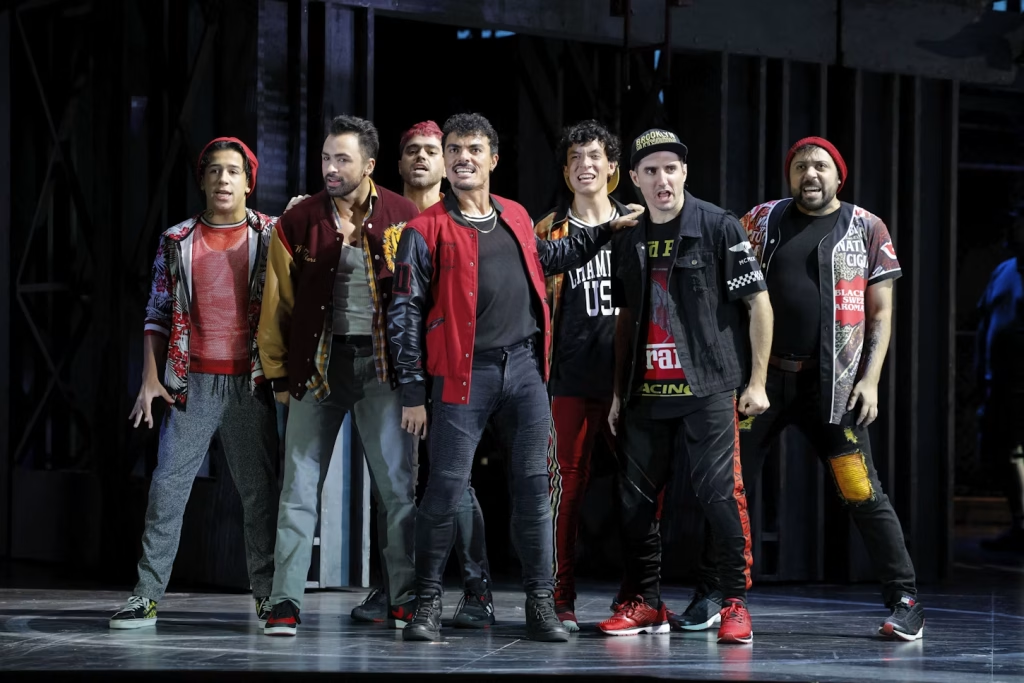
New York City’s West Side is split between the Jets and the Sharks — but these warring gangs never imagined that two of their own could fall in love. Tenor Duke Kim is Tony, a former Jet who finds himself falling for Maria (the radiant Gabriella Reyes). But Maria is promised to another, and her brother Bernardo is more than willing to rally his Sharks to keep it that way.

Photo by Cory Weaver
The most immediately striking thing about this production (other than the fantastic scenic design by Peter J. Davison) is the decision to have a Korean actor play Tony. While the rest of his Jets crew are played by white actors, this casting choice of having Duke Kim actually has strong merit as more often than not, global majority folks can be seen and view themselves as white affirming, particularly if they are lighter skinned.
This, for the most part, works except it clashes with the script that has been relatively untouched (with the exception of the “America” and “I’m So Pretty” songs being revised for our times) where the Sharks mock Tony for being an American or Tony addressing his Polish origins. I couldn’t help but think of the Asian Jim The Office cold open where Randall Park commends Rainn Wilson for not seeing race.

The biggest issue with his casting and that of Maria (played by Gabriella Reyes) is that you have these incredibly talented opera singers who maintain their operatic singing in a fast paced musical that is most decidedly not an opera with everyone else in the cast not singing in an operatic fashion whatsoever. This creates a jarring listening experience that simply does not work tonally and also character-wise as the actors immediately put off a mature, worldly vibe that betrays their naive innocent youth in the characters they are supposed to play.
These are characters that are suppose to be in their late teens and yet opera singing doesn’t lend to that credibility by any stretch of imagination. Also, their operatic training unfortunately bled into their acting as every dialogue delivery was done in a very grand and… operatic fashion.

There is a lot to admire in this production though. Amanda Castro was an absolute delight as Anita. And with the previously mentioned set design, fans of the original will immediately notice the original Jerome Robbins choreography is relatively untouched. Most of the numbers still retain their charm but the decision to have the “America” number be done only with the women was a bit lackluster without the men to counter them in the opposing viewpoints.
Here, it was portrayed with just one woman in the group who provided the counter… which didn’t work quite as well when you have the chaos of a whole group of dancers. Also, where did the men go?? I’ll also have to nitpick that because the choreography is pretty much the same, the Puerto Rican women’s costumes in this particular production did not quite have the same effect when their dresses are short.

Considering this is my first time watching the original Broadway musical, I was confused by the ordering of the numbers where the “Cool” number in Act I and “Gee, Officer Krupke” number was in Act II because I am so used to the film adaptation where those numbers were reversed in order.
Preferably, I choose the film version because it doesn’t make sense to place the silly Krupke number right after their friend Riff died in the previous act and “Cool” works much, much better after the violence of the rumble. I’m sure hardcore theatre folks would argue with me that having Act I end with the rumble is a much more powerful finale and they would have merit in that.
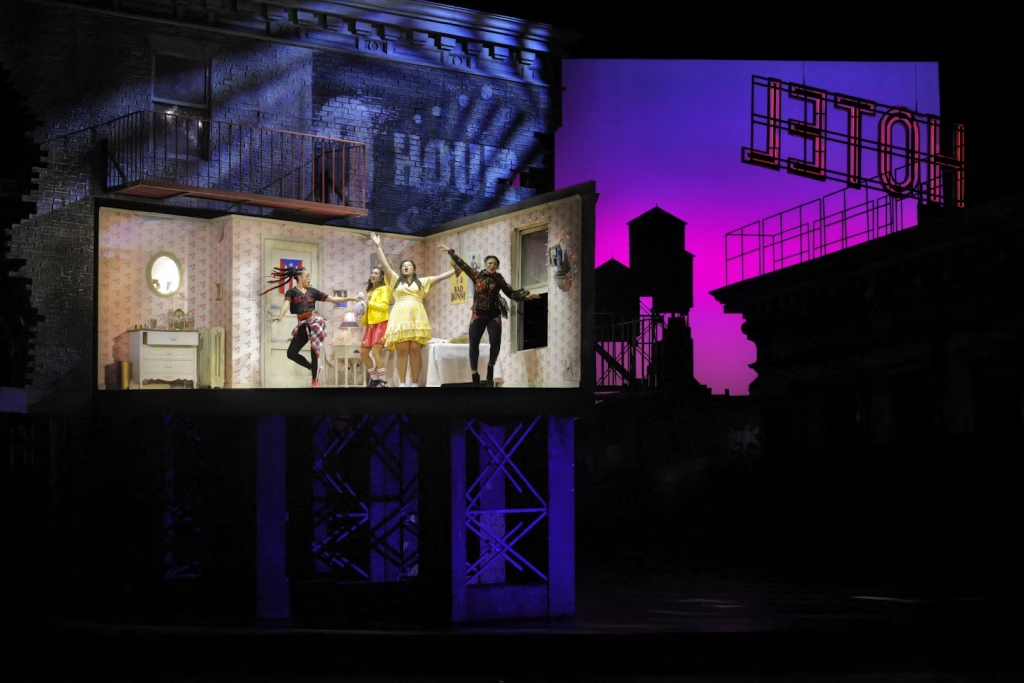
I know I said earlier I loved the set design but when it came to the interior design of Maria’s room, I could not help but stare at the Bad Bunny poster there. What time period are we in? Judging from everything we’ve been seeing, it strongly suggests a 80’s/90’s setting from the costume designs but… Bad Bunny? Are we in modern times now? What’s happening?? Also, putting a Puerto Rico flag in her room seemed less like something a teenage girl would have and more of an outwardly display of “LOOK MARIA IS PUERTO RICAN” to the audience members.
There is undoubtedly no question that hostilities toward the Latino communities have not subsided but the level of racism displayed in West Side Story was most certainly that of the ‘50s and possible argument in the ‘80s/‘90s time setting that this production was placed in. But if the musician displayed in her room is supposed to suggest this is happening now, then the most outwardly aggression towards the Puerto Ricans is not from large masses of white teenagers but that in the form of our current far right-wing government.
Which brings me to the realization I mentioned earlier in the review that it is perhaps time for this musical to be retired. While it was extraordinarily pertinent for its time and its attempt to humanize the Puerto Rican/Latino community, it is an outdated musical that cannot shake off the fact that it was written by white men in the ‘50s from its dialogue and their earnest yet heavy handed portrayal of Puerto Rican people. Because it’s a known entity, theatre companies will reliably use this musical to draw in their donors and season subscribers, which judging from the opening night for this production, are decidedly old white folks. It is time to have stories written from the Latino perspective be give more of a chance to be produced and start loosening our grasp on old classics. It’s even more groan inducing when they attempt to spin it and say it is relevant to our times when far more contemporary pieces do a much better job at that.
Are there sections in the United States where factions and all-out fights like these would still exist? That cannot be ruled out but racism is not always in your face and overt. Now, it is much more discreet and micro-aggressive, where it is not always in the form of a belligerent yelling conservative punk but the self-proclaiming liberal who, deep down inside, still does not see a Latino person as an equal when it comes to abilities and pass it off as “not enough experience.” While our current president and administration desperately wishes to return to traditional white hetero conservative values, these old musicals cannot reflect the more insidious nature of racism that is buried deep inside our country.

If you’re a massive lover of West Side Story, you’ll probably love this production as well but may also find it off-putting to see operatic elements attempt to fuse with this musical. If you’re an opera lover, the same feeling may apply. For everyone else? Results may vary but it is without a doubt an incredibly well done production that has a lot of heart. There will be ten performances from September 20 through October 12, 2025 of West Side Story presented at the Dorothy Chandler Pavilion, located at 135 North Grand Avenue, Los Angeles, CA 90012.
Tickets
Tickets begin at $27.50 and are on sale now. Tickets can be purchased online at LAOpera.org, by phone at 213.972.8001, or in person at the LA Opera box office at the Dorothy Chandler Pavilion (135 N. Grand Avenue, Los Angeles CA 90012). For disability access, call 213.972.0777 or email LAOpera@LAOpera.org.
More information about the production is available at: LAOpera.org/WestSideStory.
This production of West Side Story is licensed by Music Theatre International.
About LA Opera
Los Angeles is a city of enormous diversity and creativity, and LA Opera is dedicated to reflecting that vibrancy by redefining what opera can be. Through imaginative new productions, world premiere commissions, and inventive performances that preserve foundational works while making them feel fresh and compelling, LA Opera has become one of America’s most exciting and ambitious opera companies.
In addition to its mainstage performances at the Dorothy Chandler Pavilion, the company explores unusual repertoire each season through the LA Opera Off Grand initiative, featuring performances in a variety of venues throughout Los Angeles. The LA Opera Connects initiative offers a robust variety of educational programming and community engagement offerings that reaches people throughout every corner of Los Angeles County. Learn more at LAOpera.org.

They were white GAY men. Does that help you?
On the whole, I agree with your review. The only problem is writing a review when you have no history or understanding of the original. First, I always have a problem with calling a show “dated.” Shows have a historical context and not everything has to be modern or culturally relevant for today. The problem with this production is not honoring the time period. Also, “America” being done by only women was in the original stage production, not an invention of this production. And the switching of “Krupke” and “Cool” happened only for the 1961 film (Spielberg’s kept the original sequence) and I totally agree with your discussion of that. It makes no sense, but I think the creative team originally felt they needed comic relief because everything had gone so dark. It doesn’t work and the 1961 filmmakers understood that.